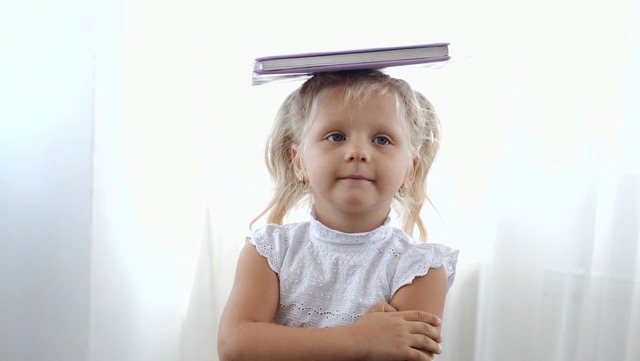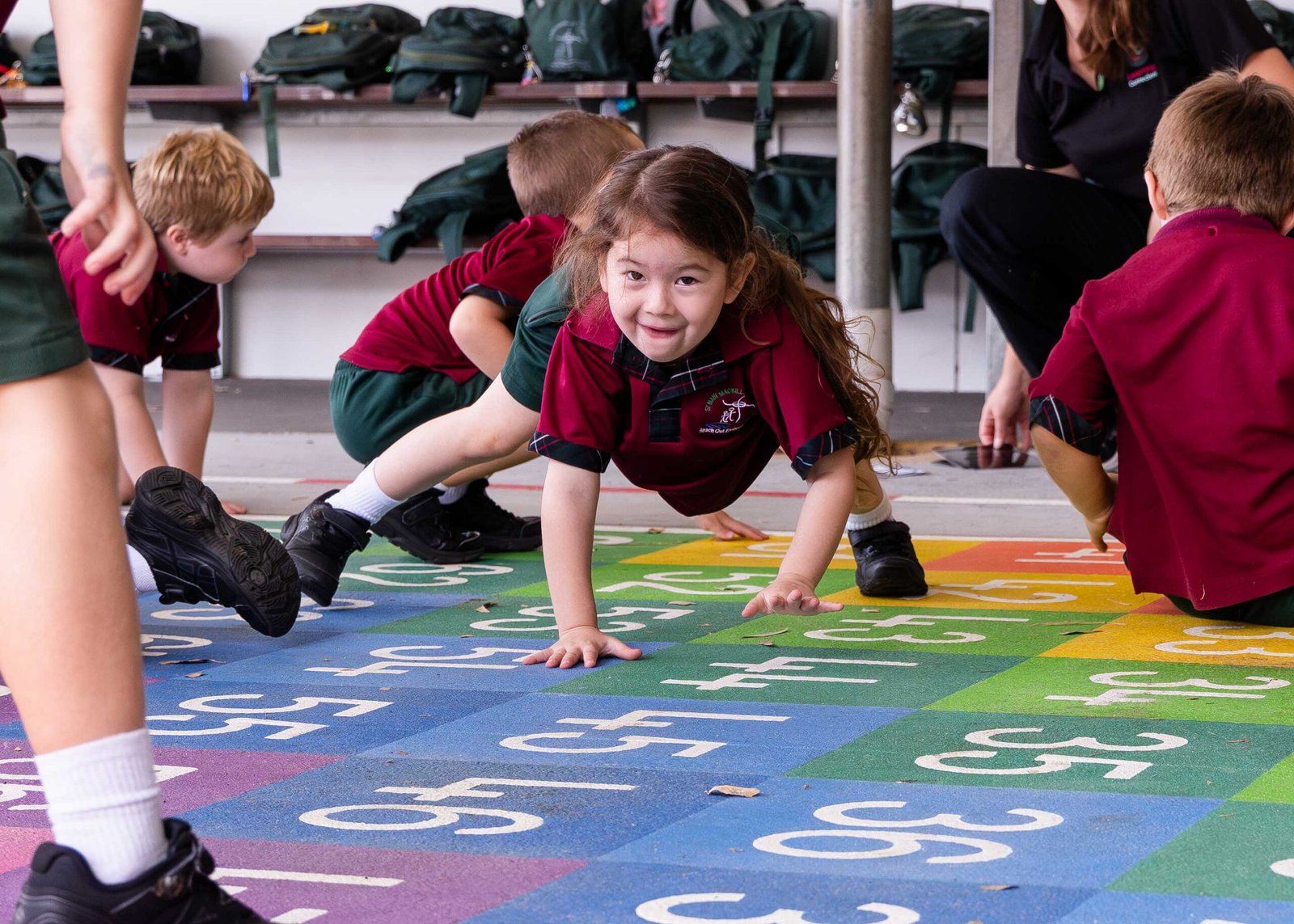
Meet children’s sensory needs outside so they won’t need to seek them indoors.
The Body Teaches the Brain
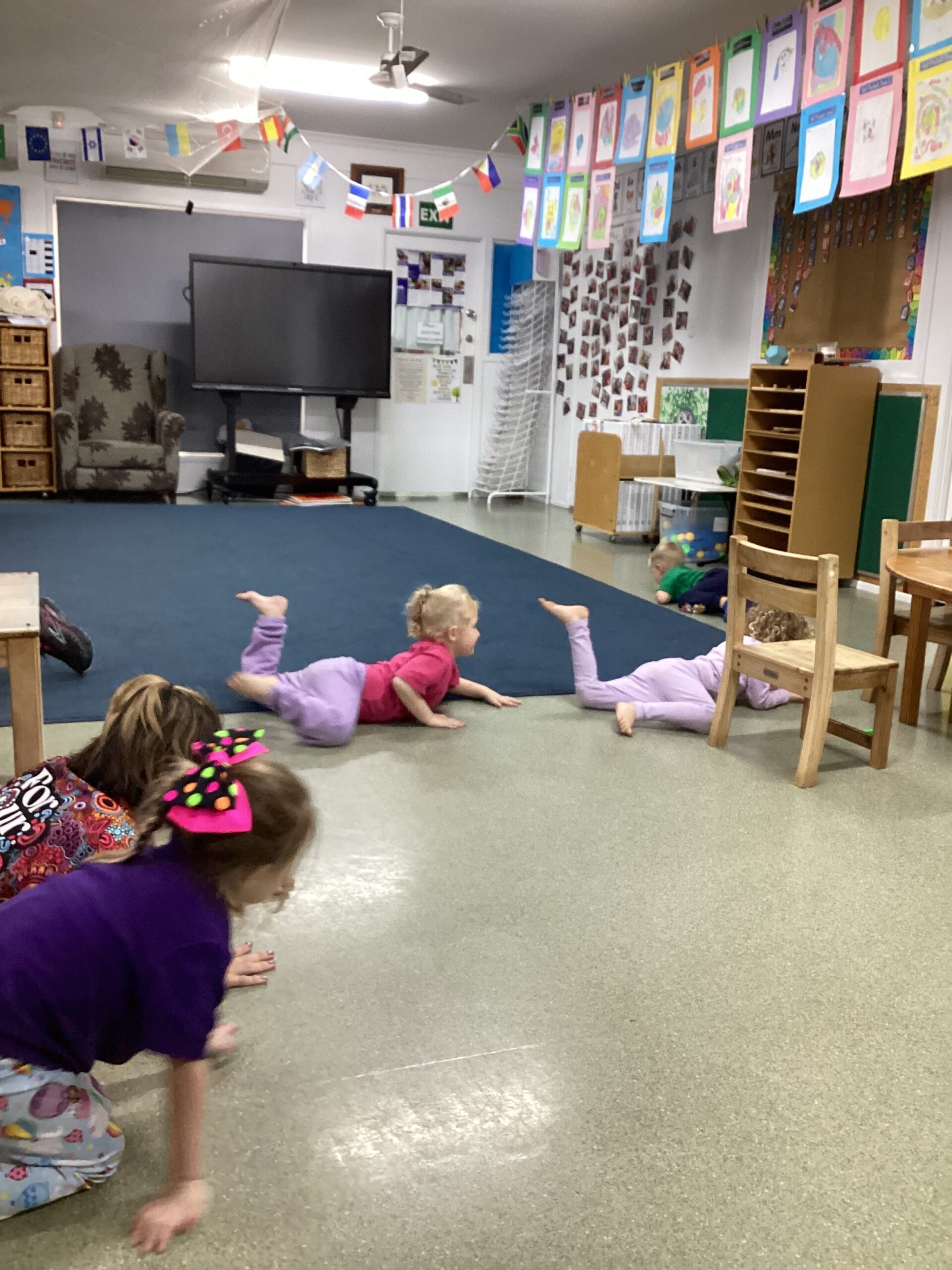
The brain does not learn by itself — the body learns too. Movement is a child’s first language. The correct sequence of physical development is essential to cognitive development while having a positive flow-on effect with school readiness and regulation. When children climb, balance, and crawl, they’re not just exercising their muscles — they’re building the neural pathways for focus, literacy, numeracy, and resilience.
Sensory Systems
Learning Connections emphasises sensory systems — visual, auditory, tactile, vestibular, and proprioceptive — before moving into sensory-motor, perceptual-motor, and cognitive development.
So, let’s get the foundations right before we start expecting school readiness to occur through osmosis. We hope all children thrive not just survive!
Play: The Child’s Navigation System
Play is how children explore, choose, practice, and experience joy.
Through play, they experiment with balance, coordination, and social connection — all vital for healthy development. The adult’s role is to observe and adapt — to notice what each child needs, and then create environments that challenge and motivate them to take the next step on their play journey.
Novel ways of using everyday equipment
Over the coming months, Learning Connections will explore how to use simple, everyday equipment found in all kindergartens childcare centres, to support sensory and movement needs. We’re starting with planks. The following activities with a plank are fun and highly motivating enticing children to play.
Why Planks?
As can be seen, planks are endlessly versatile. They are fun and highly motivating, enticing children to play. They can be bridges, roads, slides, ramps, or balance beams. Best of all, they invite children to move — and movement fuels learning.
Some ideas to try:
- Place planks in transition areas to ensure all children engage in physical activity.
- Break obstacle courses into smaller, achievable steps to build confidence.
- Share a visual plan of obstacle ideas with children before their play.
- Encourage children to draw their own obstacle plans.
- Encourage children to take turns building their obstacles.
- Take photos and place at the front door for parent/caregivers e.g., “Today we played on Tim and Merrim’s obstacle course.”
- Increase the cognitive load by encouraging children to verbalise their actions. Vary voices e.g., Loud voice day/whisper voice day/dinosaur voice day/ wide mouth frog voice day!
20 Fun and Purposeful Plank Activities:
| Activity Idea | Image | Goal Focus | Additional Benefits |
|---|---|---|---|
| 1. Slide on a wet plank on stomach in summer. |  | Sensory Goal | Encourages forward tummy movement, core strength and reflex integration. |
| 2. Walk over small obstacles along the plank. | 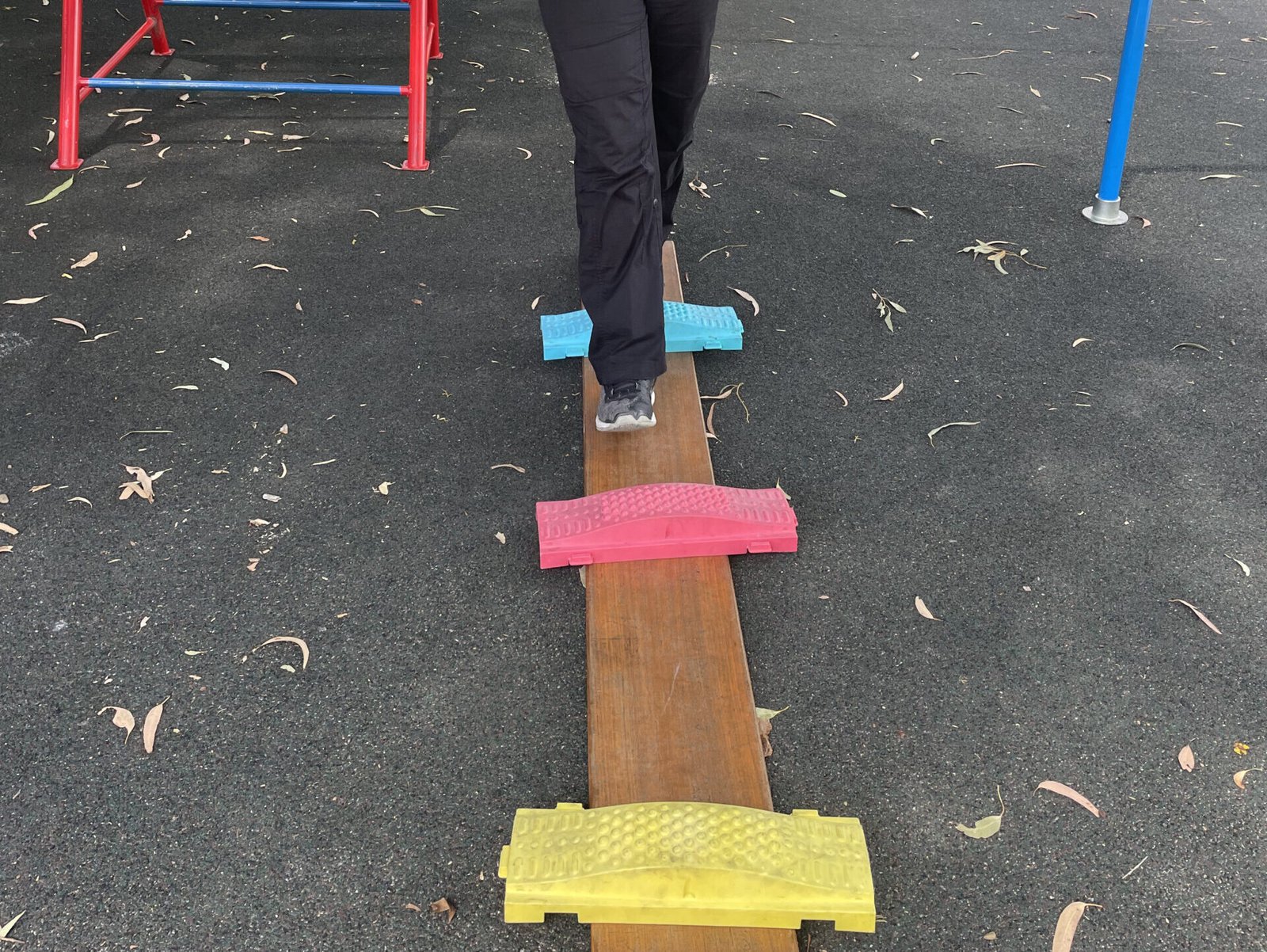 | Balance Goal | Supports visual-motor development and postural stability. |
| 3. Stick masking tape down the centre of plank to encourage a ‘two-way’ walk. | 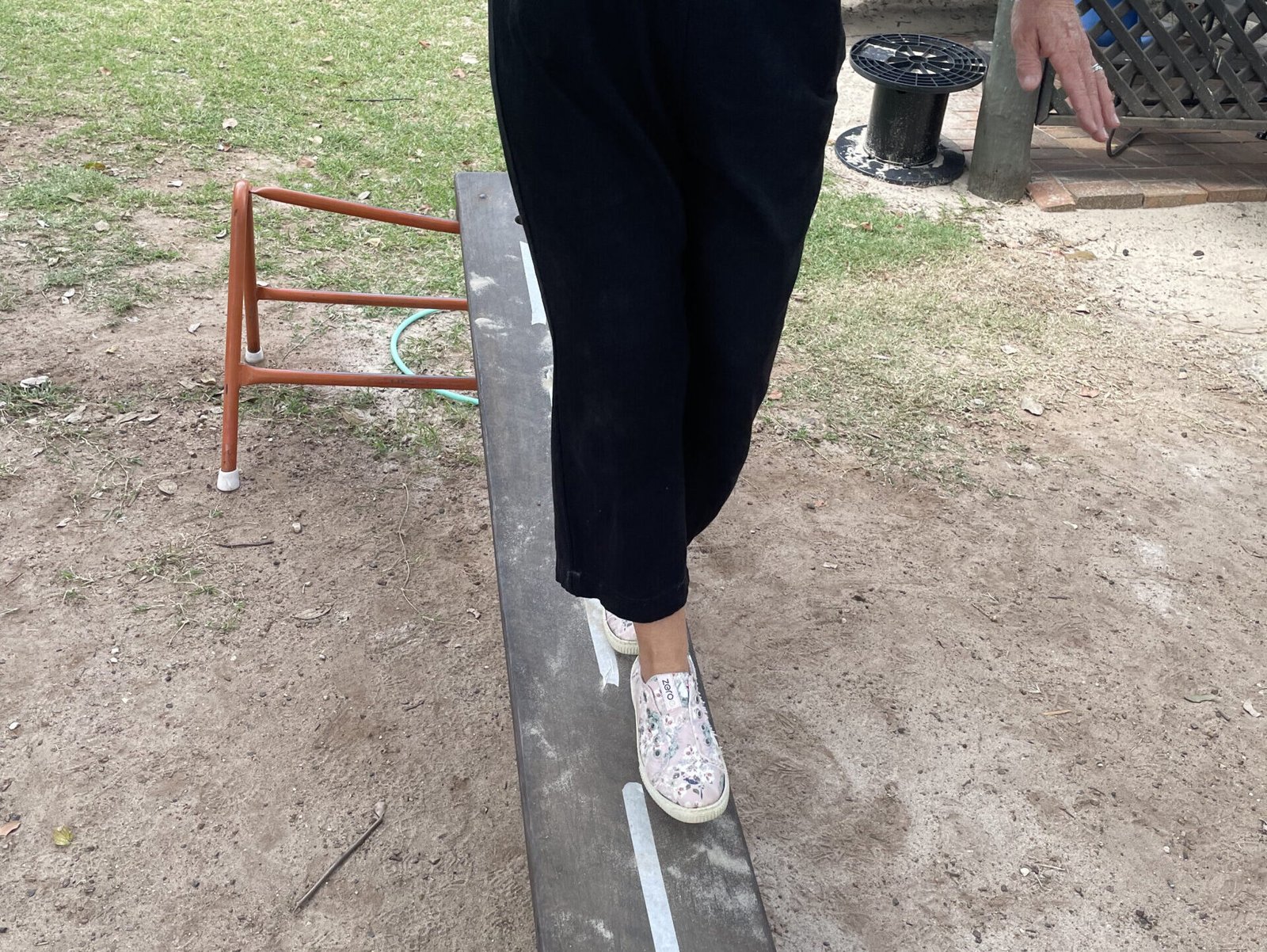 | Midline Goal | Develops spatial awareness and bilateral coordination. |
| 4. Children participate with a partner simultaneously, side by side on two identical obstacle courses. | 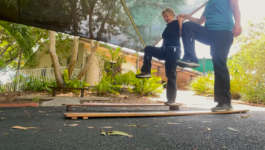 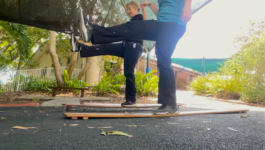 | Social & Focus Goal  | Mirroring encourages body control & awareness, cooperation, and shared focus. |
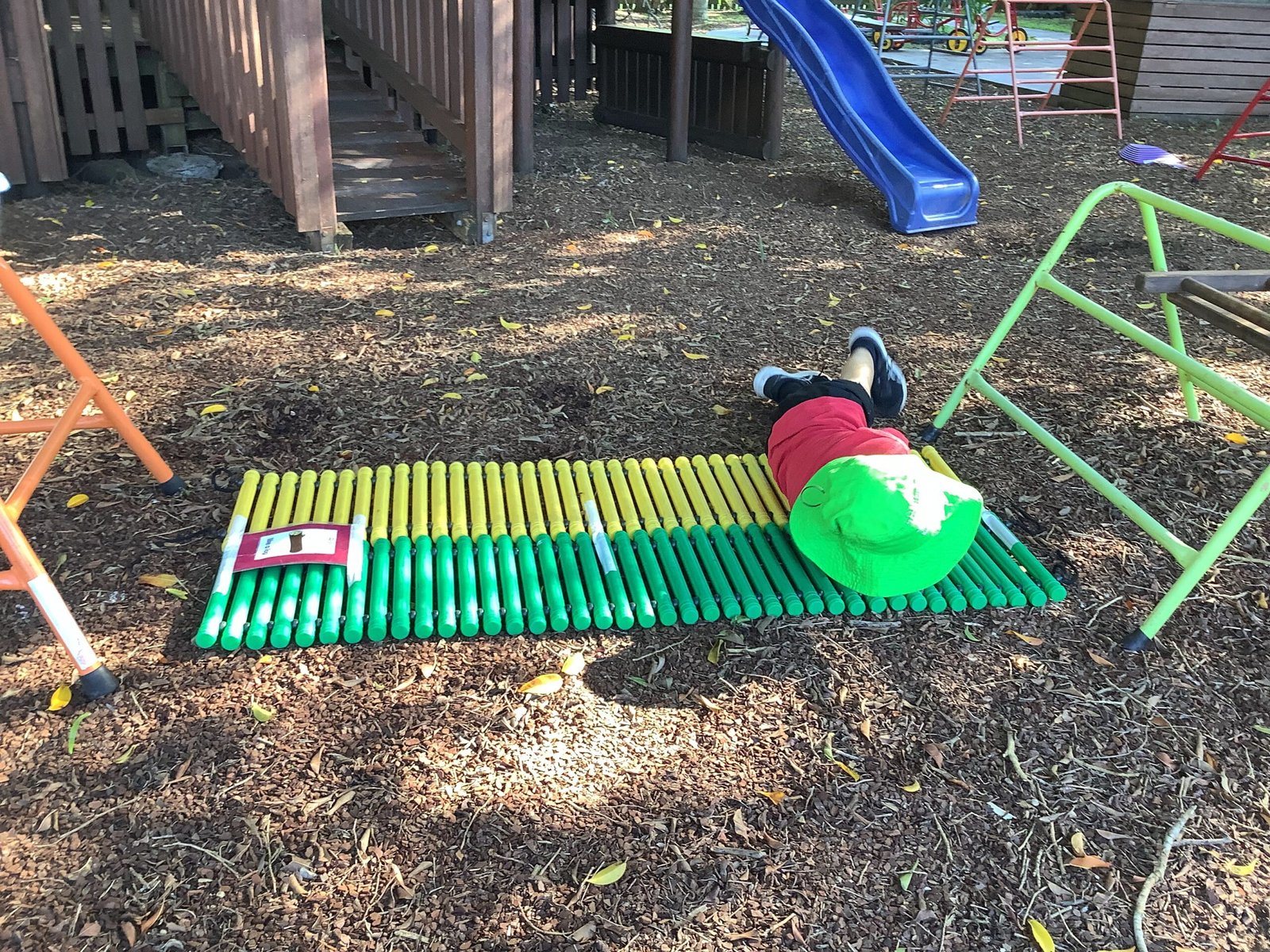
| 5. Slide on tummy along a long row of planks – add a timer. |  | Proprioception Goal | Encourages forward tummy and big muscle movements. |
| 6. Slide along a road of planks using one arm only – alternate Left and Right sides. | | Midline Goal | Encourages forward tummy movement and promotes cross-lateral coordination and control. |
| 7. Explore moving over & under on a plank “freeway” — two planks crossing under and over each other at right angles. |  | Gross Motor Planning Goal | Encourages body and spatial awareness and problem-solving. |
| 8. Crawl up planks backwards. | | Gross Motor Planning Goal | Good for upper body and hand strength necessary for paper pencil activities. |
| 9. Carry a favourite toy on and through the obstacle. | | Gross Motor Planning Goal | Challenges balance and core strength. |
| 10. Bounce balls along planks of increasing heights throughout the year. | 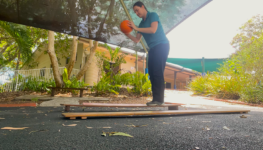 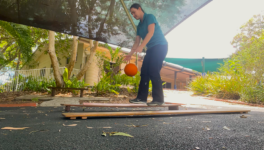 | Coordination Goal | Improves hand-eye coordination, spatial awareness and balance. |
| 11. Place a long row of planks on the ground with a resistance rope tied to the fence for children to pull along. | 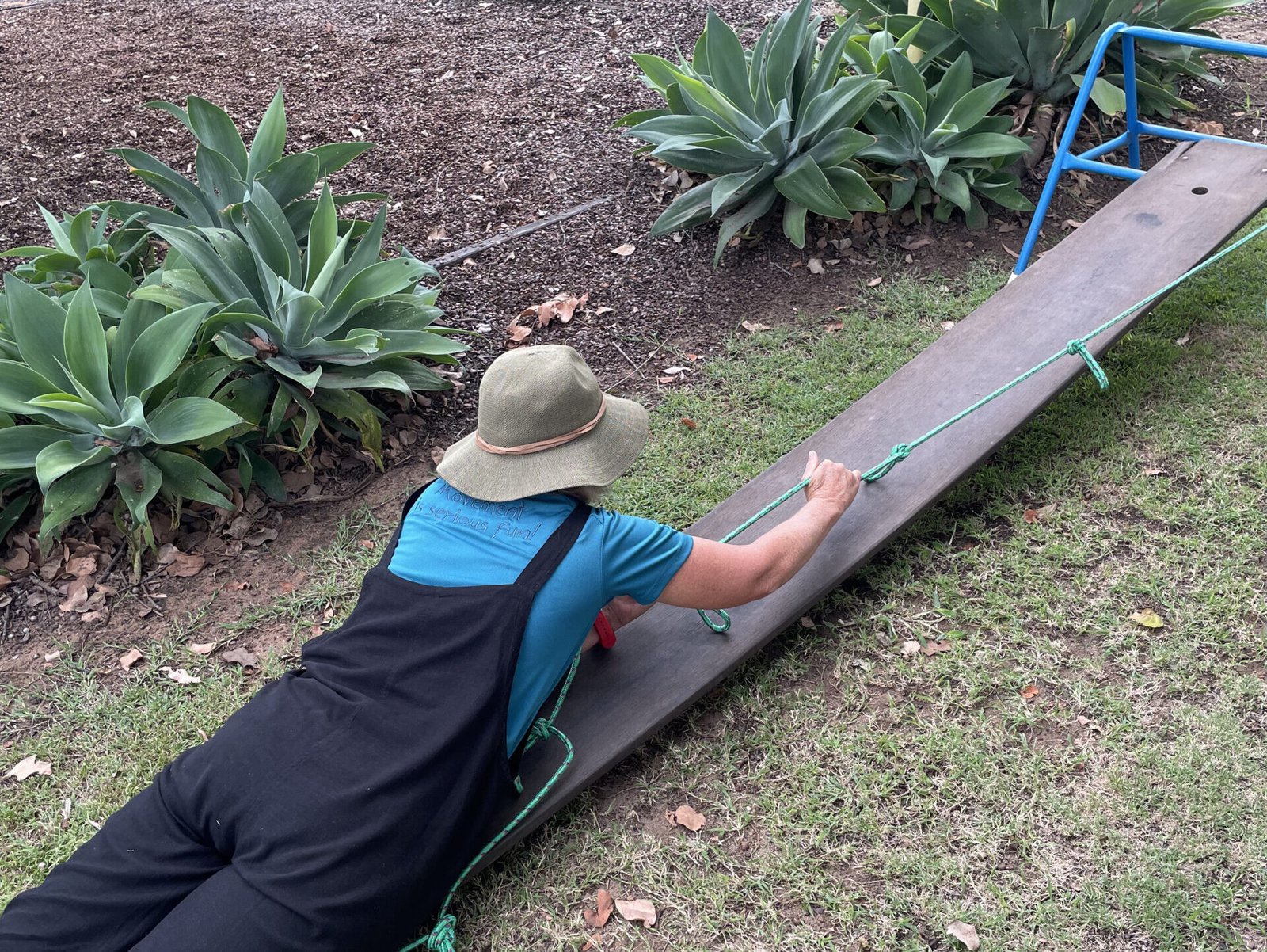 | Proprioception Goal | Helps with integration and strengthens hands and upper body. |
| 12. Place plank through tunnel. Increase the challenge by placing larger and larger items: balls, pillow, beanbags to creep over. | 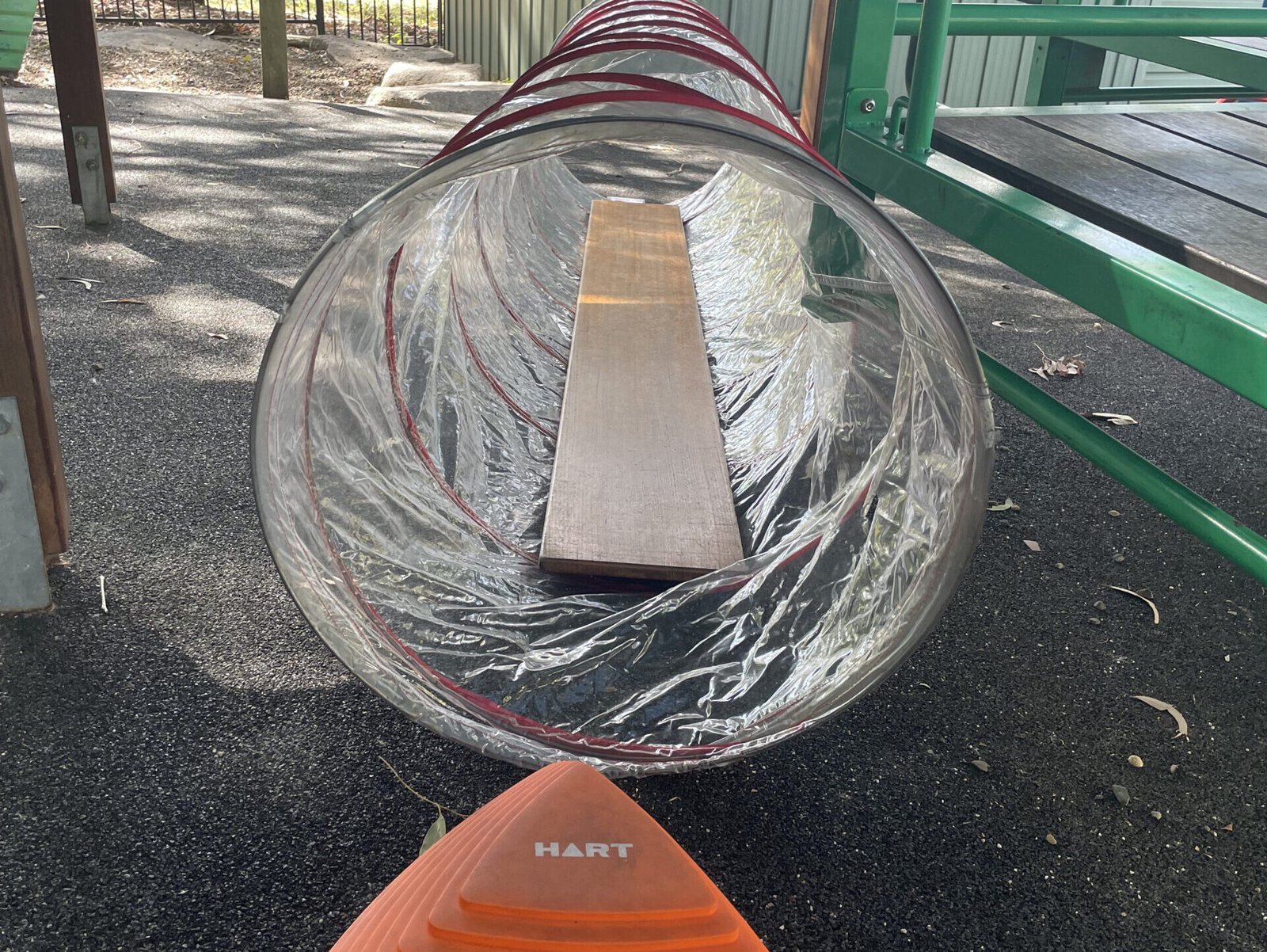 | Gross Motor Planning Goal | Helps with resilience, body and spatial awareness. |
| 13. Add toys with wheels for children to push along planks. | | Coordination Goal | Encourages forward tummy movement, balance and visual function. |
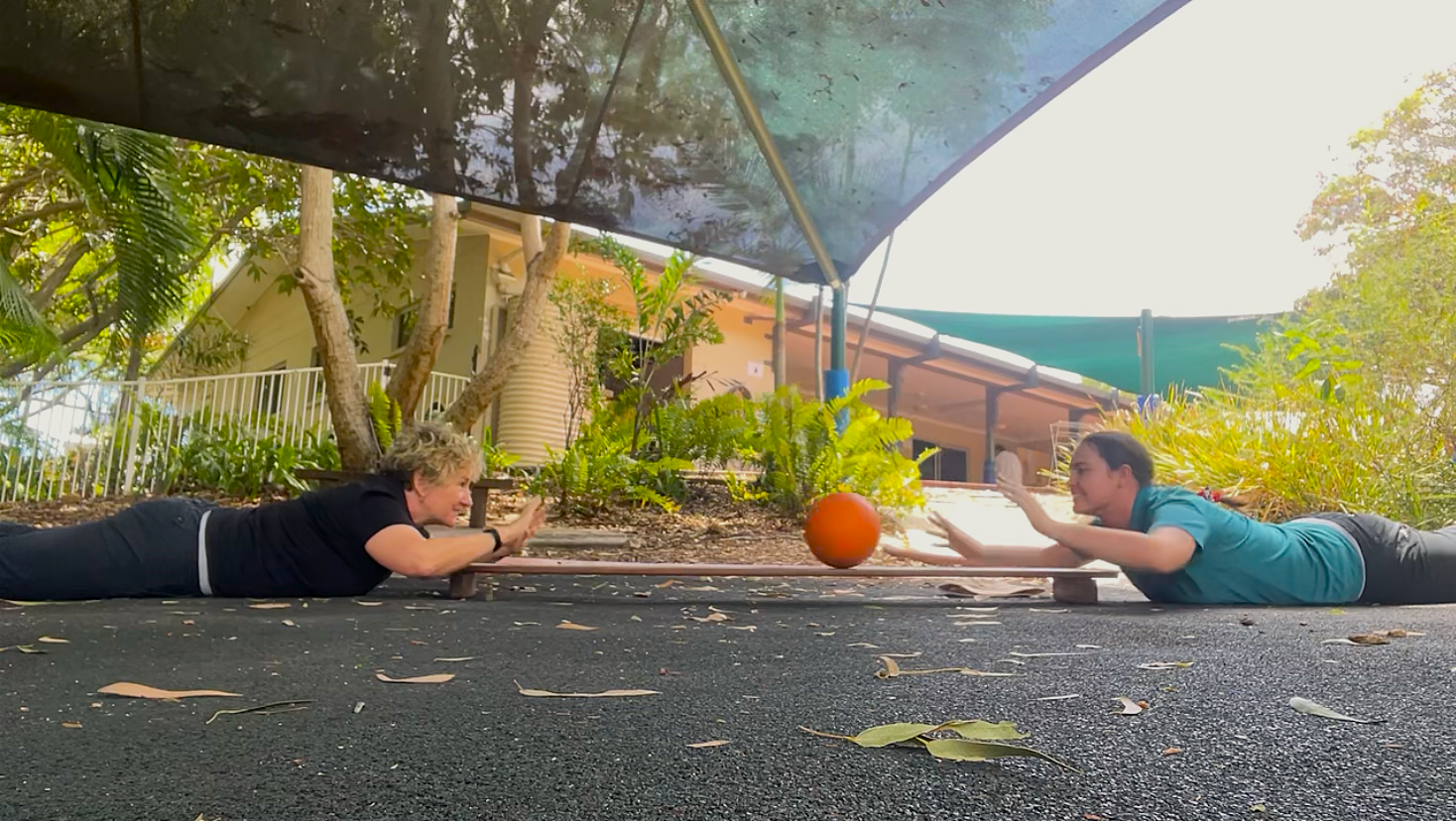
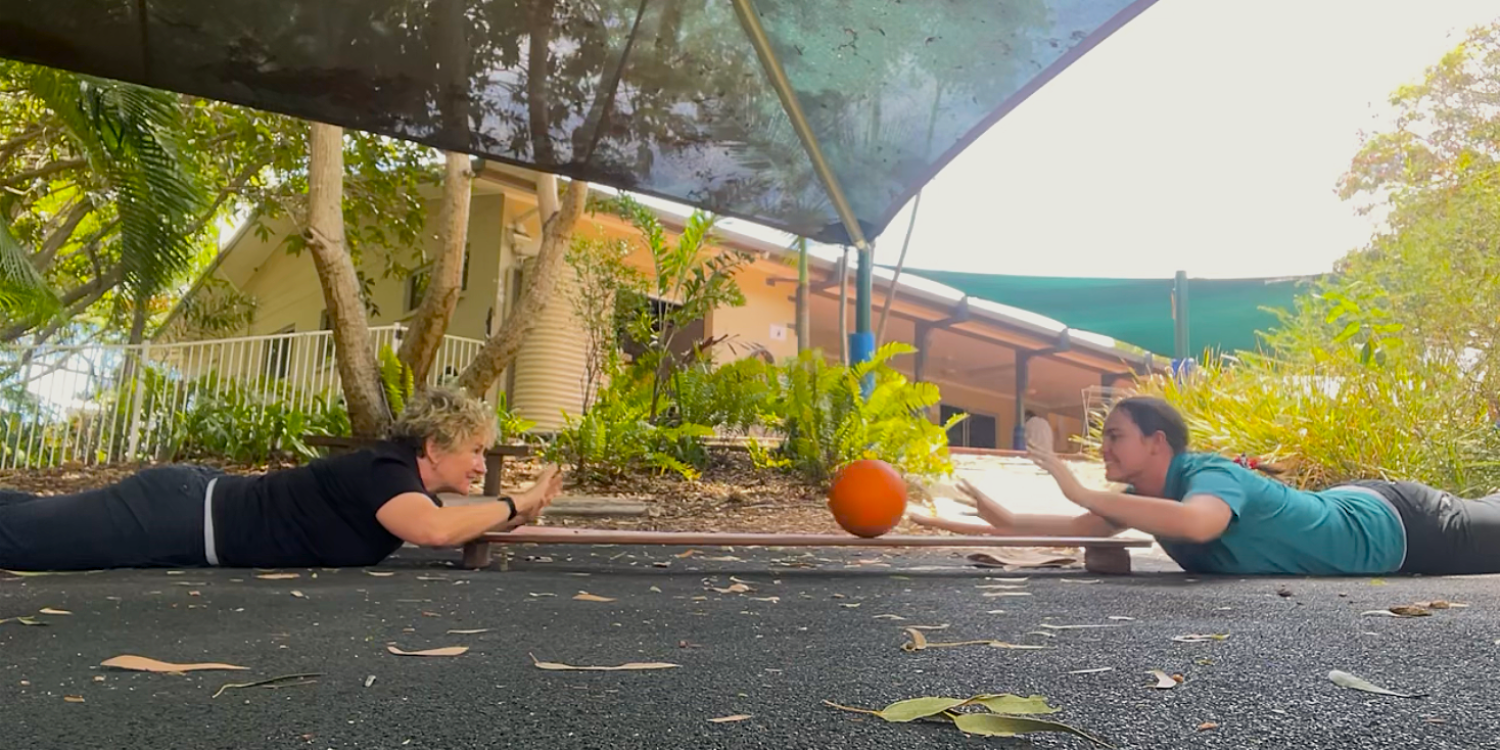
| 14. Lie or sit opposite a friend and roll different sized balls along plank. | 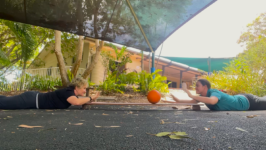 | Coordination & Social Goal | Promotes hand eye coordination, focus and cooperation. |
| 15. Tape animal cards* on planks to encourage different movements. *Learning Connections Resource | 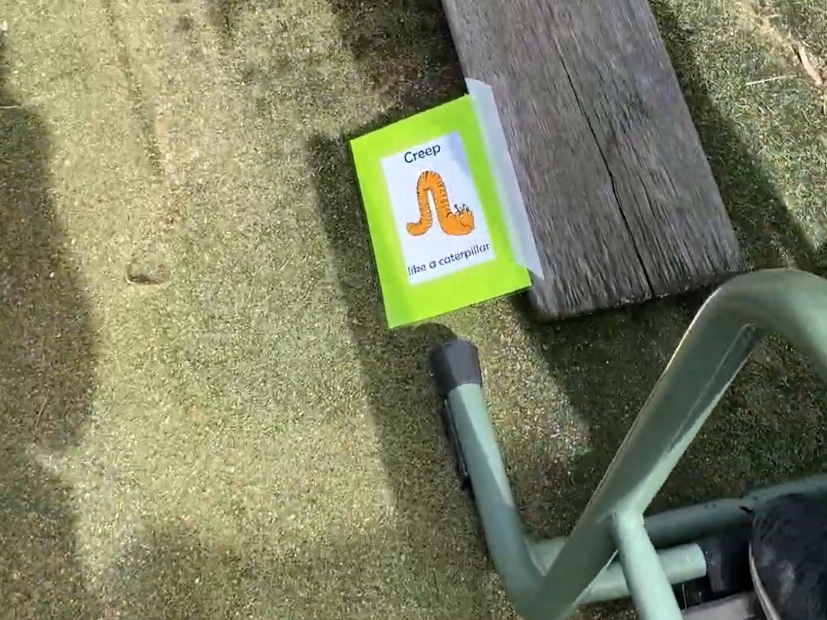 | Midline Goal | Encourages forward tummy movement, creeping, crawling, visualisation, and reflex integration. |
| 16. Set up inclined planks, add boxes with ropes attached for children to pull up and down. | | Proprioception Goal | Encourages hand, upper body strength and proprioceptive input. |
| 17. Use wheelbarrows on low planks and add differing weighted objects or cups of water. | 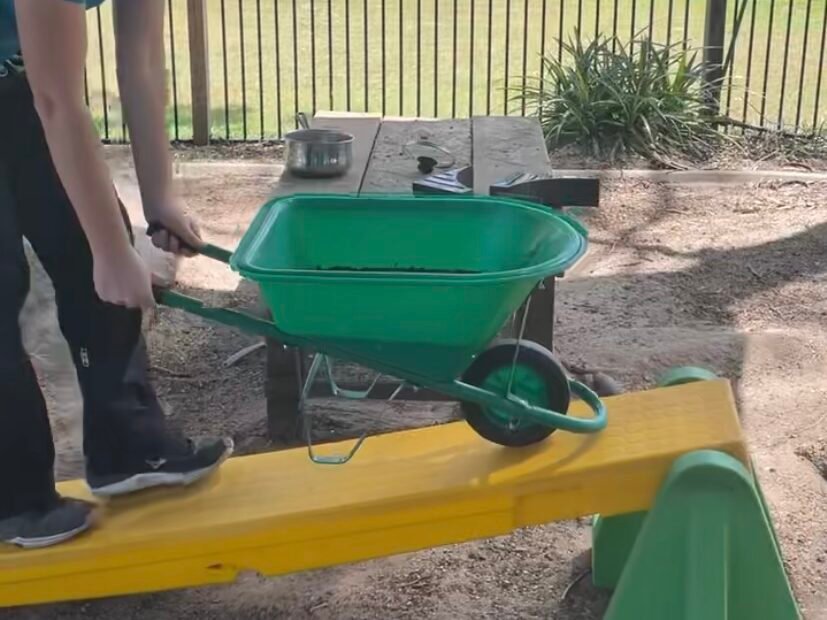 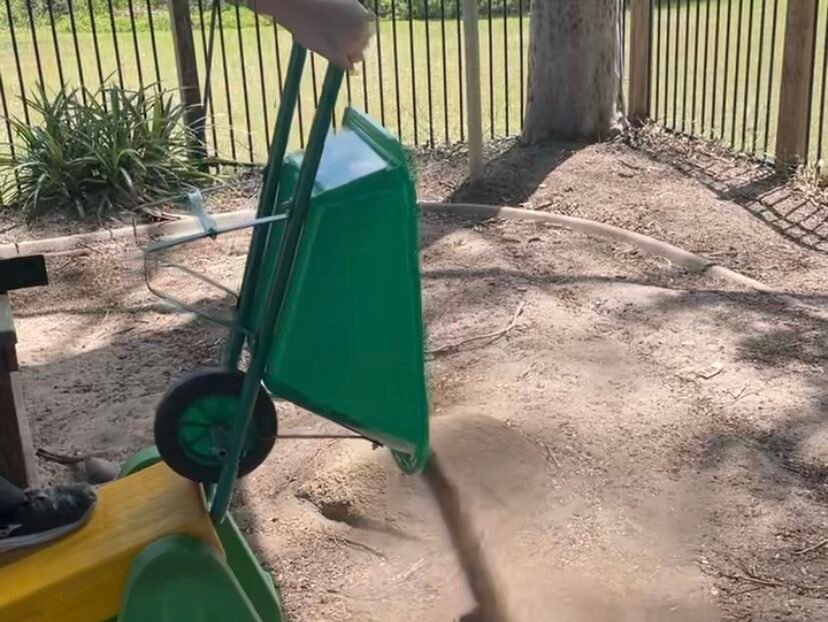 | Balance Goal | Builds gross motor coordination and upper body control. |
| 18. Blow ping-pong balls along a low plank. |  | Coordination & Focus Goal | Strengthens visual focus, breath control, and attention. |
| 19. Low planks for song dramatisation: Five Grey Elephants, The Ants Go Marching. Add puppets. |  | Language Goal | Builds sequencing, rhythm, and imaginative play. |
| 20. Thread plank through vertical hoops with coloured streamers hanging from hoops. | | Sensory Goal | Promotes tummy movement, joy, and spatial play. |
Final Thought
Every wobble, crawl, hop, jump and giggle helps wire the brain for focus, learning, and emotional balance. When children’s sensory and motor needs are met through joyful play, their capacity for learning grows naturally. So next time you see a simple plank, see it as more than a piece of timber — see it as a pathway to the brain. Keep observing, adapting, and creating play that helps every child thrive, not just survive.
Want to get involved?
For more information about how movement can integrate primitive reflexes, reduce fidgeting and improve concentration and self regulation give Dianne Boyd a no-obligation call on 0414 264 758 to discuss your needs.
Dianne Boyd
M. 0414 264 758
E. dianne@learningconnections.com.au